

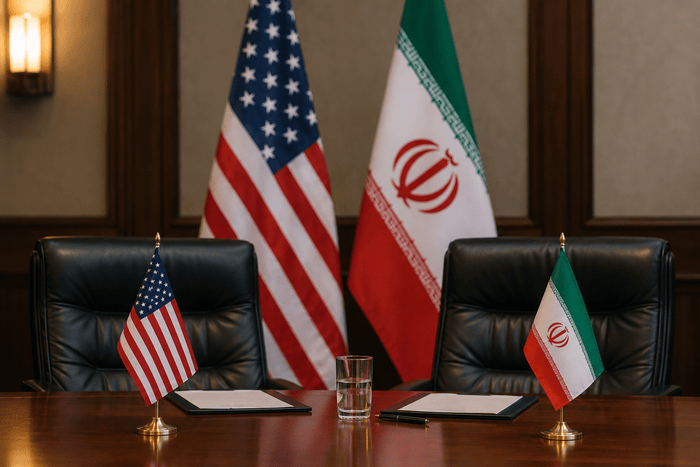
There are a few geopolitical confrontations that have influenced modern international events as much as the relationship between the United States of America and Iran. US-Iran tensions have shaped military strategy, political alliances, oil markets, and security policies around the world for more than four decades. What began as a political dispute between two countries owing to differences in philosophy has now become one of the greatest challenges in world affairs today.
The US-Iran conflict is not only a confrontation between two governments. This is a complex geopolitical issue with repercussions for regional stability, international trade, efforts at nuclear non-proliferation, and the balance of power in the Middle East. Every major development between Washington and Tehran is closely watched by governments, investors, and international organizations because of its probable implications for global security and economic stability.
Sometimes they have clashed. Sometimes they have placed economic restrictions, made military threats, engaged diplomatically, and even tried to reconcile. The two countries have squared off over the years on Iran’s nuclear program, its regional influence, economic sanctions, and military issues.
Meanwhile, the specter of a US-Iran war continues to haunt policy elites and security professionals. Both sides appear to have little interest in a full-scale military showdown. Still, mishaps, proxy wars, or diplomatic errors could create situations that jeopardize stability in the region and around the world.
Understanding the full spectrum of US-Iran relations requires an examination of the historical backdrop, strategic importance, and global implications. The competition continues to influence decisions in capitals around the world, from the vital waters of the Strait of Hormuz to discussions on nuclear diplomacy and Middle East security.
This blog examines the origins of the disagreement, the role of US-Iran diplomacy, and the far-reaching implications of US-Iran tensions for international security, economic stability, and global politics.
A Short History of US-Iran Relations
If you want to know what the present situation of US-Iran relations is, you have to look at the past, which shaped the relationship.
Until the 1979 Iranian Revolution, Iran and the United States maintained close diplomatic and strategic ties. During the Cold War, Iran was seen as an important ally in a geopolitically strategic region. Shah Mohammad Reza Pahlavi, who ruled with the help of the US, aimed to develop his country and keep strong links with the West.
But many Iranians were suspicious of foreign influence, especially American meddling in their own affairs. One episode that continues to affect Iranian sentiments was the 1953 coup that removed Prime Minister Mohammad Mossadegh and restored the Shah to power. A big well of historical resentment, all the same, much time has gone by.
The crux of the problem was the Islamic Revolution of Iran of 1979, which overthrew the Shah and created the Islamic Republic under Ayatollah Ruhollah Khomeini. The revolution radically altered Iran’s political identity and its relationship with the United States.
Later that year, Iranian students stormed the US Embassy in Tehran, taking 52 American diplomats hostage for 444 days. The hostage crisis shocked America and irreparably damaged relations between the two countries.
And mistrust has been built into the structure of the partnership ever since.
Here are some of the important issues that led to the current tensions:
- Old errors
- Economic sanctions
- Regional effect
- Military forces
- Nuclear development concerns
- Competing strategic interests
These characteristics continue to define the modern US-Iran conflict and shape how each country sees the other.
Important Dates in the US-Iran Conflict
There have been several important events in the previous four decades that have shaped the direction of US-Iran relations.
Iran-Iraq War
The Iran-Iraq War of 1980-1988 was one of the worst wars in the modern Middle East. The American support for Iraq during the war varied in intensity and further increased the Iranian hostility.
The war caused profound and lasting scars on Iranian society and defined the country’s security outlook for decades to come.
Economic Sanctions
Economic sanctions have emerged as one of the foremost instruments the United States uses to shape Iranian behavior.
Sanctions have been applied to:
- Banking systems
- Energy exports
- International trade
- Money transfer
- Major industries
Supporters argue the sanctions are a way to push for legislative change, while opponents say they are a tool that disproportionately affects everyday people.
Nuclear Programme
Iran’s nuclear program is one of the most controversial subjects in US-Iran relations.
Western governments have expressed fears that Iran would build nuclear weapons, but Iranian leaders say the program is for peaceful purposes.
The controversy remains a major part of the US-Iran conflict.
The Iran Nuclear Deal
One of the biggest successes of US-Iran diplomacy has been the 2015 Joint Comprehensive Plan of Action (JCPOA).
Under the agreement, the parties planned to accomplish the following:
- Stop the Iranian nuclear program
- More international inspections
- Remove sanctions
- Pursue diplomatic outreach
To many observers, the settlement illustrated the potential benefits of diplomacy over confrontation.
Breaking Out of the Nuclear Deal
The United States withdrew from the pact in 2018 and reimposed sanctions.
The move has drastically heightened US-Iran tensions and raised uncertainties about future diplomacy.
Death of Qasem Soleimani
In January 2020, the US carried out a drone strike that killed Iranian General Qasem Soleimani.
The episode drastically increased tensions and rekindled fears of a larger US-Iran war.
Many pundits worried for weeks the region was on the brink of direct military clash.
The Nuclear Question and the Case for US Iran Diplomacy
The nuclear issue is still one of the most important elements of US Iran diplomacy.
Nuclear technology maintains a distinctive place in international relations, with consequences for national security, energy policy, technological growth and the global non-proliferation regime.
Iran maintains its nuclear work is for good reasons such as:
- Power generation
- Medical investigations
- Scientific progress
- Technological development
But critics believe nuclear expertise could one day help weapons development.
This has resulted in decades of debate and international monitoring.
The Importance of Diplomacy
There are numerous fundamental benefits of diplomatic interaction.
Reduced Military Risks
Negotiations avoid misunderstandings that could lead to military action.
More Transparency
Inspection programs can provide the chance for verification and growth of confidence.
Economic Stability
International trade often benefits from diplomatic agreements that reduce ambiguity.
Regional Security
Good diplomacy can contribute to broader Middle East security efforts.
International Collaboration
The talks underscore how crucial international institutions and multilateral involvement are.
The often sluggish and unpredictable pace of discussion presents challenges, but many experts still consider US Iran diplomacy as the best hope for long-term stability.
US-Iran Tensions and Their Impact on Middle East Security
The US and Iran are playing out their tensions on the major stage of the Middle East.
Both countries have a significant presence in the region and partnerships with a number of governments, organisations and security partners.
They are fighting their battle in some big countries:
- Iraq
- Syria
- Lebanon
- Yemen
- Bahrain
- Saudi Arabia
- Israel
Regional issues sometimes become embroiled in the wider strategic rivalry between Washington and Tehran.
Effect on Regional Stability
The implications for Middle East security include:
Bigger Military Budgets
Many regional governments spend a lot of money on military and security.
Proxy Conflicts
Competing interests often lead to indirect conflicts via related groupings.
Diplomatic Polarization
Countries may feel pressured to choose one side or the other.
Safety Threats
Ongoing tensions continue to impede progress on issues of terrorism, economic development and humanitarian concerns.
This means that changes in US-Iran relations can have repercussions for security calculations across the Middle East.
The Strategic Importance of the Strait of Hormuz
One of the most strategically important locations in the US-Iran conflict is the Strait of Hormuz.
This little channel is one of the most important maritime chokepoints in the world.
The Strait of Hormuz is a critical chokepoint for the health of global energy markets, since it accounts for a considerable share of the world’s oil exports.
Why the Strait of Hormuz Matters
This waterway is important because it allows:
- Global energy shipping
- Global trade
- Maritime traffic
- Strategic military operations
- Economic security
Whenever US-Iran tensions flare up, concerns regarding shipping safety and freedom of navigation quickly emerge.
Small disruptions can cause big increases in energy prices.
Due to its significance, the Strait of Hormuz remains a vital site for global security policy and naval operations.
Effect on Global Markets
The US-Iran conflict is much more than just diplomacy and military affairs.
Global markets are watching events closely since uncertainty can affect:
- Oil prices
- Stock markets
- Commodity prices
- Trade flows
- Investor confidence
Iran is one of the world’s largest holders of oil and natural gas.
A breakdown in production, exports, or transportation can have an influence on the world supply chain.
Energy Costs
Energy markets are particularly vulnerable to geopolitical tensions.
Possible outcomes include:
- Increased fuel prices
- Higher transportation expenses
- Rising inflation
- Slower economic growth
- Market volatility
Energy is essential to today’s economies, and changes affecting Iran often draw global interest.
Escalating Tensions and Global Security Threats
The US-Iran relationship is a factor in several major global security threats.
There may not be direct warfare, but the risk of escalation always exists.
Cybersecurity Risks
Both countries have cyber capabilities that can affect:
- Government systems
- Financial institutions
- Energy infrastructure
- Communication networks
Cyber conflict is now a fundamental feature of modern geopolitical competition.
Nuclear Proliferation
The issue of nuclear weapons continues to dominate international security discussions.
The lack of robust diplomatic frameworks could increase proliferation risks elsewhere.
Terrorism and Extremism
Regional instability may provide opportunities for extremist groups to exploit security vacuums.
Humanitarian Consequences
Military confrontations often result in:
- Civilian displacement
- Refugee flows
- Economic hardship
- Infrastructure damage
These outcomes explain why reducing global security threats remains a priority for policymakers worldwide.
The Role of Major Powers in Global Politics
The key countries have a lot at stake in the Middle East; therefore, US-Iran tensions have ramifications that extend far beyond the region.
China
Regional stability is critical to China’s economic growth and energy security.
Chinese priorities include:
- Energy imports
- Trade routes
- Infrastructure investments
- Economic partnerships
Russia
Russia has intensified its cooperation with Iran on important strategic issues.
Russian objectives include:
- Regional influence
- Security cooperation
- Economic collaboration
- Geopolitical leverage
European Union
European governments have mostly supported diplomatic engagement and steps toward de-escalation.
European priorities include:
- Regional stability
- Nuclear non-proliferation
- Trade partnerships
- Conflict prevention
The role of these actors demonstrates the increasing interconnectedness of global politics.
Future Scenarios for US-Iran Relations
The future of US-Iran relations remains uncertain.
Several possible pathways may emerge.
Scenario One: Diplomatic Revival
Diplomatic breakthroughs could reduce tensions and foster cooperation.
Potential benefits include:
- Enhanced stability
- Economic growth
- Reduced military risks
- Stronger international cooperation
Scenario Two: Prolonged Stalemate
The tensions may continue without major escalation or resolution.
This would likely result in:
- Ongoing sanctions
- Diplomatic uncertainty
- Periodic crises
- Regional instability
Scenario Three: Escalation Toward Conflict
A more dangerous scenario involves a significant military confrontation.
Potential effects of a large-scale US-Iran war include:
- Global energy market disruption
- International security concerns
- Trade network instability
- Humanitarian crises
Many analysts believe both sides want to avoid direct conflict, but the possibility cannot be completely dismissed.
Conclusion
The US Iran conflict is one of the key geopolitical concerns of the twenty-first century. What began as a bilateral dispute has become a multilayered issue with far-reaching implications for global politics, regional stability, economic security and international diplomacy.
The fallout from US-Iran tensions stretches far beyond the two nations, encompassing debates over nuclear development, economic sanctions, fears of military escalation and the security of the Strait of Hormuz.
Future US Iran relations will continue to shape Middle East security, influence energy markets and affect efforts to combat major global security threats. Whether through diplomacy, strategic competition, or renewed negotiations, the relationship between Washington and Tehran will remain a powerful force in international affairs for years to come.
The success of US-Iran diplomacy could determine whether future decades are defined by cooperation, competition, or conflict. In an increasingly interconnected world, managing this relationship responsibly is not merely a regional concern but a global imperative.
For further please visit WellUdigital