
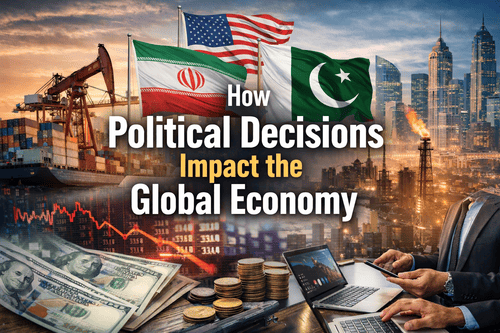
The global economy is closely related to the political systems, government policies, and international relations. The political choices and actions of governments can affect global trade, investment, inflation, jobs, supply chain, and financial markets.
Even a single policy decision in one country can have economic consequences in several regions in today’s globalized world. Political measures can affect economic growth and stability and include agreements and treaties with other nations, taxation, international conflicts, and sanctions.
Awareness of the politics-economics nexus can assist businesses, investors, and individuals in better preparing for the uncertainties and long-term financial shifts ahead.
Understanding the Global Economy
The global economy is the interdependence of the economic activities of countries around the world. It includes:
- International trade
- Global financial systems
- Investment flows
- Currency exchange
- Supply chains
- Labor markets
They depend on one another for products and services, energy, technologies, and raw materials. Given the interdependence, the economies can be impacted by larger political events that extend beyond the nation’s borders.
Political stability can be beneficial to economic growth, and instability can hinder economic activity and investor confidence.
The Connection Between Politics and Economics
The impact of the government’s actions on economic performance is important. Political decisions have impacts on the way businesses are run, the response of markets, and economic interaction between countries.
Governments develop policies on:
- Taxation
- Trade regulations
- Interest rates
- Labor laws
- Public spending
- International agreements
They have an immediate effect on the work, inflation, cost of production, and consumer confidence in the Global Economy.
Political Decisions and International Trade
International trade is one of the areas most greatly affected by politics.
Trade Agreements
International trade agreements could foster economic growth by eliminating tariffs and facilitating cooperation between businesses.
There are several possible effects of positive policies:
- Increase exports
- Strengthen international partnerships
- Improve market access
- Support business expansion
Having good international trade ties can help to create a more stable Global Economy.
Tariffs and Trade Restrictions
Tariffs or import restrictions may be applied by governments to protect domestic industries. These actions, however, could also have an impact on production costs and supply chains worldwide.
Trade uses Political impact to refer to, for instance:
- Increased product prices
- Supply shortages
- Reduced international investment
- Slower economic growth
Major economies can affect markets worldwide, as they compete with each other over trade issues.
Political Impact on Financial Markets
Political events and government announcements can have a sudden impact on the financial markets.
Investor Confidence
Generally, stability in the political climate will attract investment, while an uncertain political climate will lead to some volatility in the market.
These events can impact investor confidence:
- Elections
- Policy changes
- International conflicts
- Regulatory reforms
- Economic sanctions
The impact of politics on the economy is sometimes more apparent in the stock market, fluctuations in currency valuations, etc.
Political Impact on the Global Economy Through Supply Chains
The Central Bankers and the governments are two institutions that collaboratively coordinate inflation, joblessness, and economic growth.
Political decisions that concern:
- Public spending
- Economic stimulus
- Tax policy
- Interest rate strategies
All these factors can affect rates of interest, company investment, and consumer spending in the Global Economy.
Political Events and Their Impact on the Nation
Changes in policy or political tensions could cause a disruption:
- Shipping routes
- Manufacturing operations
- Energy supplies
The import and export of goods and services.Systems of import and export.
However, at times, the availability of products may be delayed due to international sanctions or geopolitical conflicts, raising their costs worldwide.
Energy and Resource Policies
Numerous countries rely on energy imports as well as energy raw materials imports. News of political decisions that affect oil, gas, agricultural, or technology exports can impact prices globally.
The impact of politics on the global economy is often felt when oil and gas prices are driven higher by international unrest and/or government policies.
The higher the energy costs, the more likely they are to impact:
- Transportation
- Manufacturing
- Household expenses
- Inflation rates
Employability and Workforce Impacts
Labor regulations and policies on immigration and pay that are adopted by the government could affect employment markets abroad.
Labor Policies
Political decisions regarding:
- Minimum wages
- Worker protections
- Immigration systems
- Business regulations
Can impact the availability of the workforce and economic productivity.
International companies can adjust business strategies according to the shifting political context.
Economic Uncertainty and Employment
Political unrest can lead to a decrease in business investment and job creation. Businesses might postpone growth or expansion when the economic climate becomes uncertain.
This illustrates how a political decision may have an impact on the local and international employment market.
Global Inflation and Political Influence
How can the government control inflation? What is the role of the government in controlling inflation?
A large-scale government spending program can help expand economic activity, but under specific circumstances, contribute to inflation.
Political decisions regarding:
- Public infrastructure
- Tax reductions
- Financial support programs
- Monetary policies
May affect the demand and market prices.
Foreign Affairs and Inflation
Geopolitical tensions could have an impact on trade and resource availability, raising costs for food, fuel, and transportation globally.
This could result in inflation in the Global Economy that can impact businesses and households around the world.
Political and Economic Stability of the Ship
In politically stable countries, foreign investors have greater confidence in the country’s economic stability.
Political stability can bring several benefits. There are several advantages of political stability.
Favorable political conditions can facilitate:
- Business confidence
- Long-term investments
- Job creation
- Economic expansion
- International partnerships
Stable governments are more likely to be able to get the long-term economic strategies in place.
The Risk of Political Instability
Political instability could lead to the creation of:
- Currency fluctuations
- Reduced foreign investment
- Slower economic growth
- Higher unemployment
- Financial uncertainty
Political systems and economic performance continue to be a significant part of the Global Economy today.
Technology, Regulation, and Politics
International policy decisions and government regulations also have an impact on the technology industries.
The government can enact legislation on any of the following:
- Data privacy
- Artificial intelligence
- Digital taxation
- Cybersecurity
- International technology trade
Such regulations have the potential to impact innovation, global business, and international competition.
Climate Policies and the Global Economy
It is well established that climate change poses a significant threat to humanity. Climate change is a known global crisis.
Green Energy Investments
Political support for renewable energy can generate new industry and jobs.
Governments can invest in:
- Solar energy
- Electric vehicles
- Sustainable infrastructure
- Environmental regulations
Such decisions can impact future economic development and industrial growth.
Facing Economic Difficulties in the Transition
Adapting to changes from traditional industries to the new sustainable industries can also lead to temporary economic restructuring of companies and jobs.
The challenge for decision makers to achieve both environmental and economic sustainability is still great.
How do Businesses react to Political Change?
Many companies keep an eye on politics to minimise financial risk.
Some of the common ones include:
- Diversifying supply chains
- Going to more markets
- Adjusting investment plans
- Managing currency risks
- Monitoring international regulations
No longer can a company survive as if the political climate in which it is operating wouldn’t matter. A company must adapt to the changing political climate in the modern Global Economy.
Conclusion
Politics and economics remain a force to shape financial systems, international trade, employment, and investment around the world. Government actions and policies have the potential to affect the economy, business confidence, supply chains, and inflation internationally.
In the current context of increasing interconnectivity between countries, the impact of the Political on the Economy and the wider Global Economy assumes a greater significance. The links between these developments could prove useful for the decision-making of individuals, businesses, and policymakers in times of political and economic transition.
FAQs
What are the implications of political decisions for the international economy?
Political decisions can have an impact on trade, investments, inflation, supply chains, and international financial markets.
What is the political effect on the economy?
Political impact on the economy is the effect of government action and policy on economic growth, employment, and market stability.
Why is the stability of the policy important to the growth of the economy?
Political stability can help to attract business investment, build investor confidence, and promote long-term economic development.
What are the effects of trade policies on the world economy?
Trade policies may impact trade flows, trade and supply chains, international pricing, and international cooperation.
Do political disputes influence the inflation rate?
Yes. War can affect the price of energy, trade goods, and services.
How do changes in politics affect the financial markets?
Elections, policy changes, sanctions, and geopolitical tensions can have a swift impact on the financial markets.
What are the functions of governments in the international economy?
Governments provide economic influence through taxation, financial policy, regulation, spending policy, and trade agreements.
What are companies doing to deal with uncertainty in politics?
Economic risks can be managed by various means, such as diversification of operations, tracking of regulations, and changing investment strategies.
For more insights, visit WellU Digital